



Growing Food in Small Spaces
One of the biggest myths in gardening is that you need a large property to grow your own food.
While extra space can certainly be useful, it’s far from essential.
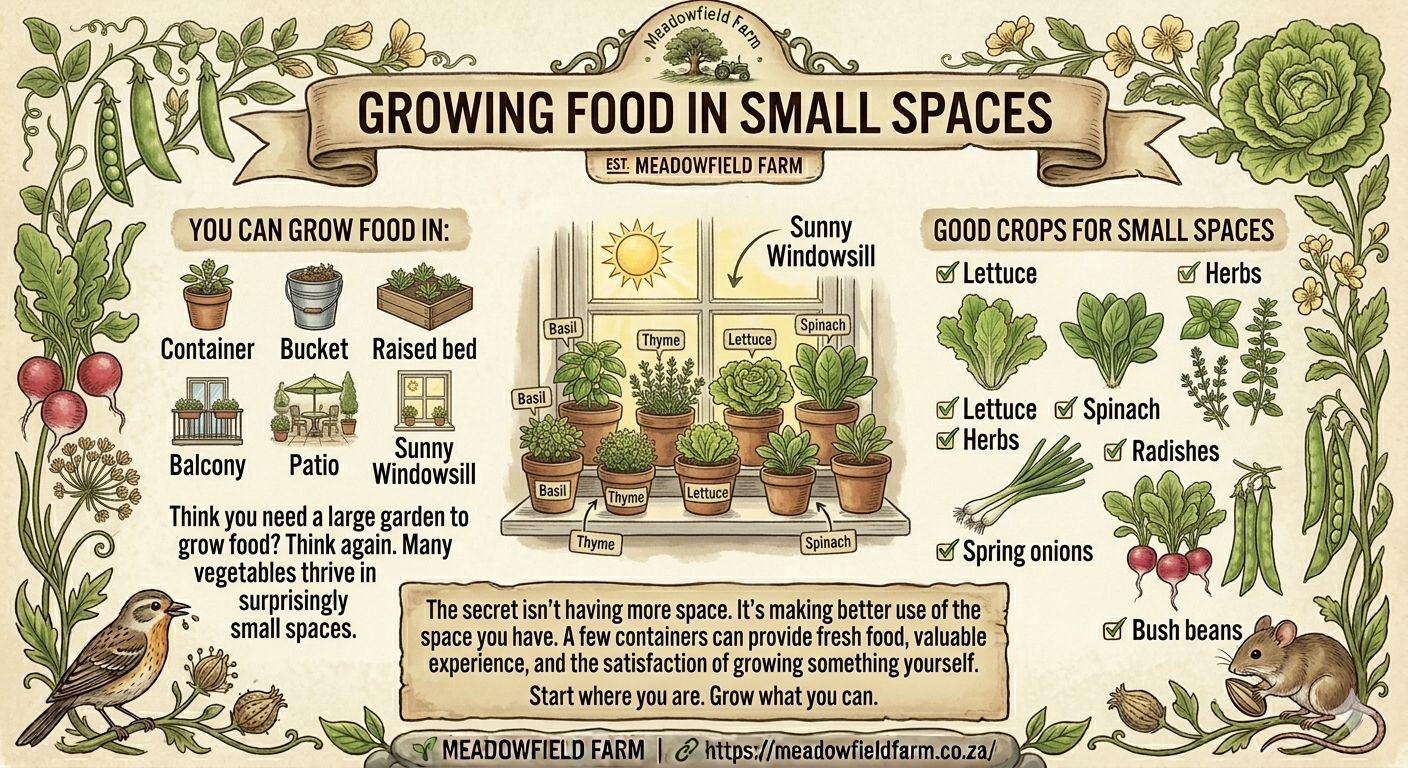
People all over the world grow vegetables in containers, courtyards, balconies, patios, rooftops, and tiny backyards.
The size of your growing space matters far less than how you use it.
Whether you have a small balcony or a sunny corner of a yard, you can still produce a surprising amount of food.
Start With What You Have
Many people delay gardening because they believe they need more space.
The truth is that almost any sunny area can become a growing space.
You don’t need:
- A large property
- Perfect garden beds
- Expensive equipment
You simply need:
- Sunlight
- Soil
- Water
- Suitable plants
The best garden is the one you actually start.
Why Small-Space Gardening Works
A smaller garden has several advantages.
Easier Maintenance
Smaller growing areas require:
- Less watering
- Less weeding
- Less money
- Less time
This makes gardening more manageable, especially for beginners.
Better Observation
When your garden is close to your daily living space, you’re more likely to notice:
- Pests
- Water needs
- Plant growth
- Harvest opportunities
Successful gardening often comes down to paying attention.
Lower Costs
Fewer containers and smaller growing areas mean lower startup costs.
This makes small-space gardening an excellent way to learn without making a large financial commitment.
Choose Crops That Match Your Space
Not every crop is ideal for a small garden.
Focus on plants that offer a good harvest without demanding a lot of room.
Excellent Small-Space Crops
Leafy Greens
- Lettuce
- Spinach
- Rocket
- Kale
These crops grow quickly and can often be harvested multiple times.
Herbs
Herbs are among the most productive plants for limited spaces.
Popular choices include:
- Basil
- Parsley
- Chives
- Coriander
- Mint (best kept in its own container)
A few herb pots can supply fresh flavour for months.
Root Vegetables
Many root crops grow surprisingly well in containers.
Examples:
- Radishes
- Beetroot
- Carrots (short varieties)
Compact Beans
Bush beans provide a generous harvest while taking up relatively little space.
Think Vertically
When space is limited, grow upwards.
Vertical gardening allows you to use height as well as ground area.
Suitable plants include:
- Climbing beans
- Peas
- Cucumbers
- Some squash varieties
Simple trellises, fences, or support structures can dramatically increase growing space.
Containers Are Your Friend
Containers make gardening possible almost anywhere.
You can use:
- Pots
- Buckets
- Recycled containers
- Grow bags
- Wooden boxes
Just make sure they have drainage holes.
Plants dislike sitting in waterlogged soil.
Make Every Plant Count
In small gardens, every plant should earn its place.
Ask yourself:
- Will I eat it regularly?
- Does it grow well in my climate?
- Is it productive for the space it uses?
Growing food you actually enjoy eating makes gardening far more rewarding.
Common Small-Space Mistakes
Growing Too Much
Trying to fit too many plants into a small area often leads to competition for light, water, and nutrients.
Give plants room to breathe.
Ignoring Sunlight
Most vegetables need at least several hours of direct sunlight each day.
Before planting, observe how the sun moves across your space.
Choosing the Wrong Crops
Large sprawling plants can quickly overwhelm small gardens.
Match the crop to the available space.
Small Gardens Can Produce Big Results
A productive garden isn’t measured by its size.
It’s measured by how well it meets your needs.
A few containers of lettuce, herbs, beans, and spinach can provide fresh food, reduce grocery bills, and build valuable gardening skills.
Many experienced gardeners started with a single pot and a handful of seeds.
The important thing is not how much space you have.
It’s how you use it.
Final Thoughts
Don’t wait for the perfect property or the perfect garden setup.
Start with the space you have today.
A balcony, patio, courtyard, or sunny corner can become the beginning of something much bigger.
Because every successful garden starts the same way—with one plant, one container, and one decision to begin.