



Water-Wise Gardening Tips for a More Resilient Garden
Water is one of the most valuable resources in any garden.
Yet many gardeners unknowingly waste large amounts of it through poor watering habits, exposed soil, and unsuitable plant choices.
The good news is that creating a water-wise garden doesn’t mean sacrificing productivity.
In fact, gardens that use water efficiently are often healthier, more resilient, and easier to maintain.
The goal is simple:
Make every drop count.
What Is Water-Wise Gardening?
Water-wise gardening is the practice of growing plants in a way that reduces water waste while maintaining healthy growth.
Instead of relying on constant watering, water-wise gardeners focus on:
- Improving soil
- Reducing evaporation
- Using water efficiently
- Selecting suitable plants
- Working with natural conditions
The result is a garden that requires less effort and fewer resources over time.
1. Build Healthy Soil First
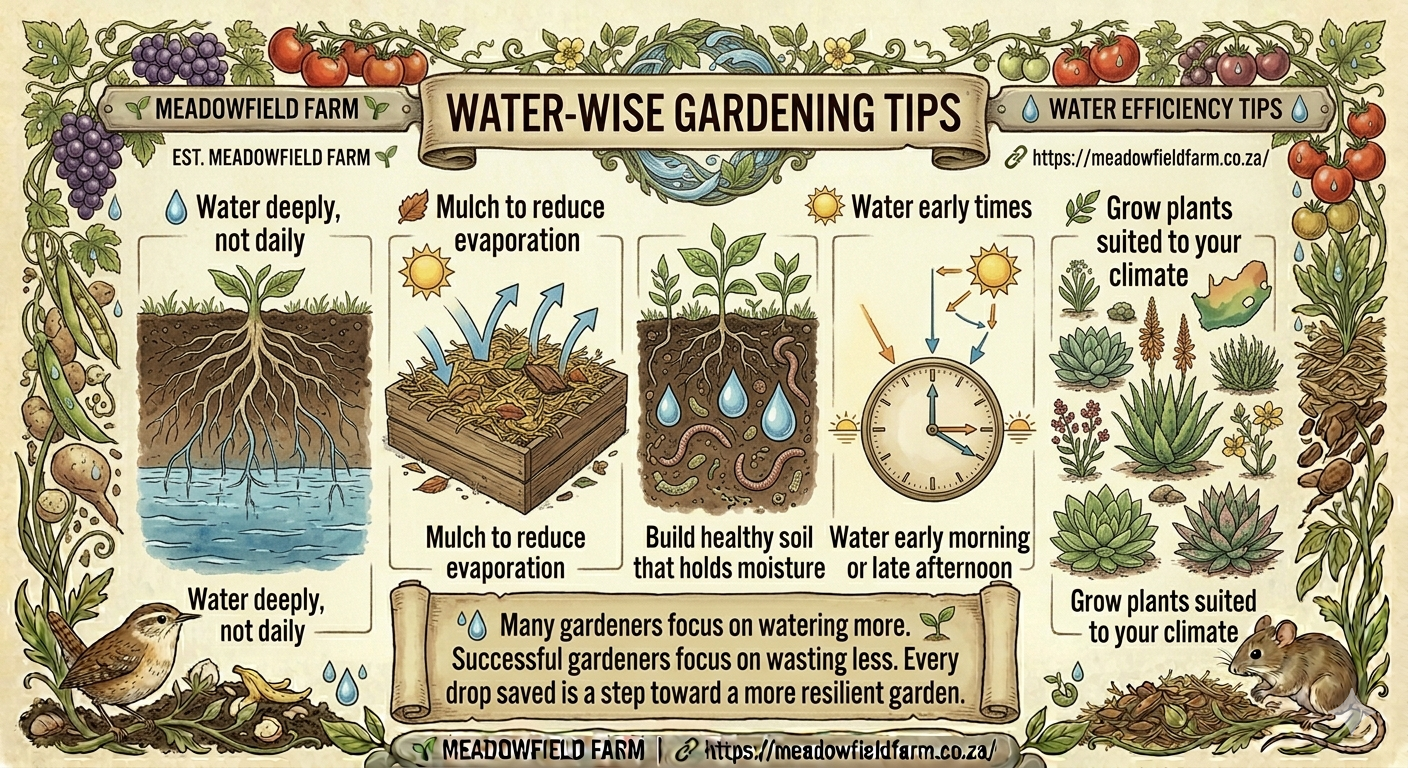
Healthy soil acts like a natural water reservoir.
Soil rich in organic matter can hold significantly more moisture than poor, compacted soil.
Adding:
- Compost
- Well-rotted organic matter
- Mulch
helps soil retain water for longer periods.
Many watering problems are actually soil problems in disguise.
2. Use Mulch Generously
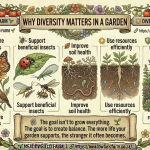
Mulch is one of the simplest and most effective water-saving tools available.
A layer of mulch helps:
- Reduce evaporation
- Protect soil from direct sun
- Moderate soil temperatures
- Improve soil as it breaks down
Suitable mulch materials include:
- Straw
- Leaves
- Wood chips
- Grass clippings (dried)
Mulching often reduces watering needs dramatically.
3. Water Deeply, Not Frequently
Frequent shallow watering encourages shallow roots.
Shallow roots dry out quickly and make plants more dependent on constant watering.
Instead:
- Water thoroughly
- Allow moisture to soak deeply into the soil
- Water less often but more effectively
This encourages stronger root systems that can access moisture deeper underground.
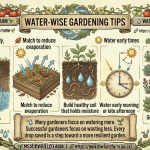
4. Water at the Right Time
Timing matters.
The best times to water are:
🌅 Early morning
or
🌇 Late afternoon
During the hottest part of the day, a significant amount of water can be lost through evaporation before it reaches plant roots.
Watering during cooler periods makes every litre work harder.
5. Keep Soil Covered
Bare soil loses moisture quickly.
Nature rarely leaves soil exposed.
Ground covers, mulch, and closely spaced plantings help:
- Reduce water loss
- Protect soil organisms
- Improve overall soil health
Think of soil cover as a protective blanket for your garden.
6. Choose Plants Suited to Your Climate
One of the smartest ways to conserve water is to grow plants that naturally thrive in your conditions.
Plants adapted to local climates often require:
- Less watering
- Less maintenance
- Less intervention
A plant that constantly struggles in your environment will always demand more resources.
7. Group Plants by Water Needs
Not all plants require the same amount of water.
Grouping similar plants together allows you to:
- Water more efficiently
- Avoid overwatering some plants
- Reduce waste
This simple strategy can make a noticeable difference in larger gardens.
Common Watering Mistakes
Many gardeners unknowingly waste water through habits such as:
❌ Watering every day regardless of conditions
❌ Watering during the hottest part of the day
❌ Leaving soil bare
❌ Relying on shallow watering
❌ Ignoring soil health
Correcting these habits often saves more water than expensive irrigation systems.
The Long-Term Benefits
A water-wise garden offers more than lower water use.
It often leads to:
- Healthier plants
- Stronger root systems
- Improved soil health
- Lower maintenance
- Greater resilience during dry periods
In many ways, water-wise gardening is simply smart gardening.
Final Thoughts
The most successful gardens are not always the ones receiving the most water.
They’re often the ones making the best use of the water they have.
By improving soil, using mulch, watering wisely, and choosing suitable plants, you can create a garden that remains productive while using fewer resources.
Because in gardening, sustainability isn’t about doing more.
It’s about wasting less.