




What to Plant Each Season (A Simple Guide)
One of the most common reasons beginner gardens fail is poor timing.
Plants are strongly influenced by temperature, sunlight, and seasonal changes. When crops are planted at the right time of year, they grow faster, stronger, and with fewer problems.
Instead of trying to force everything to grow all year round, successful gardeners learn to work with the seasons.
Understanding Seasonal Growing
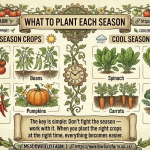
Most vegetables fall into two broad categories:
- Warm-season crops
- Cool-season crops
Each group thrives under different environmental conditions.
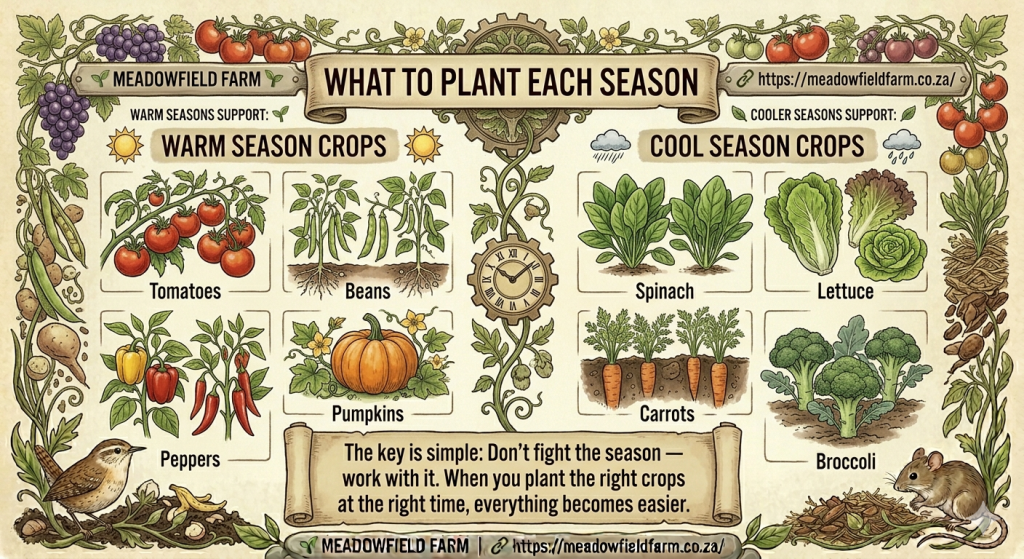
🌞 Warm Season Crops
Warm-season crops grow best in higher temperatures and longer daylight hours.
These plants typically need:
- Consistent warmth
- Full sun
- Protection from frost
Common warm-season crops include:
- Tomatoes
- Peppers
- Beans
- Cucumbers
- Pumpkins
- Corn
These crops generally produce best during spring and summer in most climates.
❄️ Cool Season Crops
Cool-season crops prefer lower temperatures and can often tolerate light frost.
They grow best when:
- Days are cooler
- Soil temperatures are moderate
- There is less intense heat stress
Common cool-season crops include:
- Spinach
- Lettuce
- Kale
- Carrots
- Radishes
- Broccoli
- Cabbage
These crops are often planted in autumn and winter or early spring, depending on the region.
Why Timing Matters
Planting at the wrong time can cause several problems:
- Slow or stunted growth
- Poor germination
- Increased pest pressure
- Early flowering (bolting) in leafy greens
- Reduced harvest quality
When plants are aligned with their natural season, they require less intervention and tend to perform better overall.
Simple Seasonal Strategy
Instead of overcomplicating planting calendars, use this simple approach:
1. Observe your climate
Pay attention to when temperatures rise and fall in your area.
2. Group crops by temperature needs
Separate warm-season and cool-season crops.
3. Rotate with the seasons
As one season ends, replace crops with ones suited for the next.
This creates a natural cycle in your garden.
Common Mistake: Planting Everything at Once
Many beginners try to grow all their favourite vegetables at the same time.
This often leads to:
- Competition between plants
- Poor harvest timing
- Overcrowded beds
- Increased maintenance
A seasonal approach spreads out effort and improves results.
Small Space Advantage
If you’re gardening in containers or small spaces, seasonal planting becomes even more important.
It allows you to:
- Reuse containers throughout the year
- Maximise production in limited space
- Keep soil active instead of idle
Start Simple
You don’t need complex charts or planting schedules to begin.
Start by dividing your garden into two phases:
- Warm-season planting
- Cool-season planting
Then gradually refine your understanding as you gain experience in your own environment.
Final Thoughts
Gardening becomes much easier when you stop forcing plants into the wrong season.
Instead of fighting nature, you work with it.
When timing is right, everything else in the garden becomes more forgiving.