



Why Diversity Matters in a Garden
When people first start gardening, they often focus on individual plants.
They think about tomatoes, lettuce, beans, carrots, or herbs.
But healthy gardens are about more than individual crops.
They are living systems made up of countless relationships between plants, insects, birds, soil organisms, and the environment around them.
The more diverse these relationships become, the stronger and more resilient a garden often becomes.
Nature has understood this principle for millions of years.
As gardeners, we can learn a great deal from it.
What Does Diversity Mean in a Garden?
Garden diversity simply means growing a variety of plants rather than relying on a single crop or a very limited selection.
Diversity can include:
- Different vegetables
- Herbs
- Flowers
- Fruit plants
- Native species
- Ground covers
It can also include encouraging beneficial wildlife such as:
- Bees
- Butterflies
- Birds
- Earthworms
- Beneficial insects
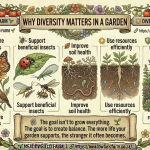
Every species contributes something to the overall health of the system.
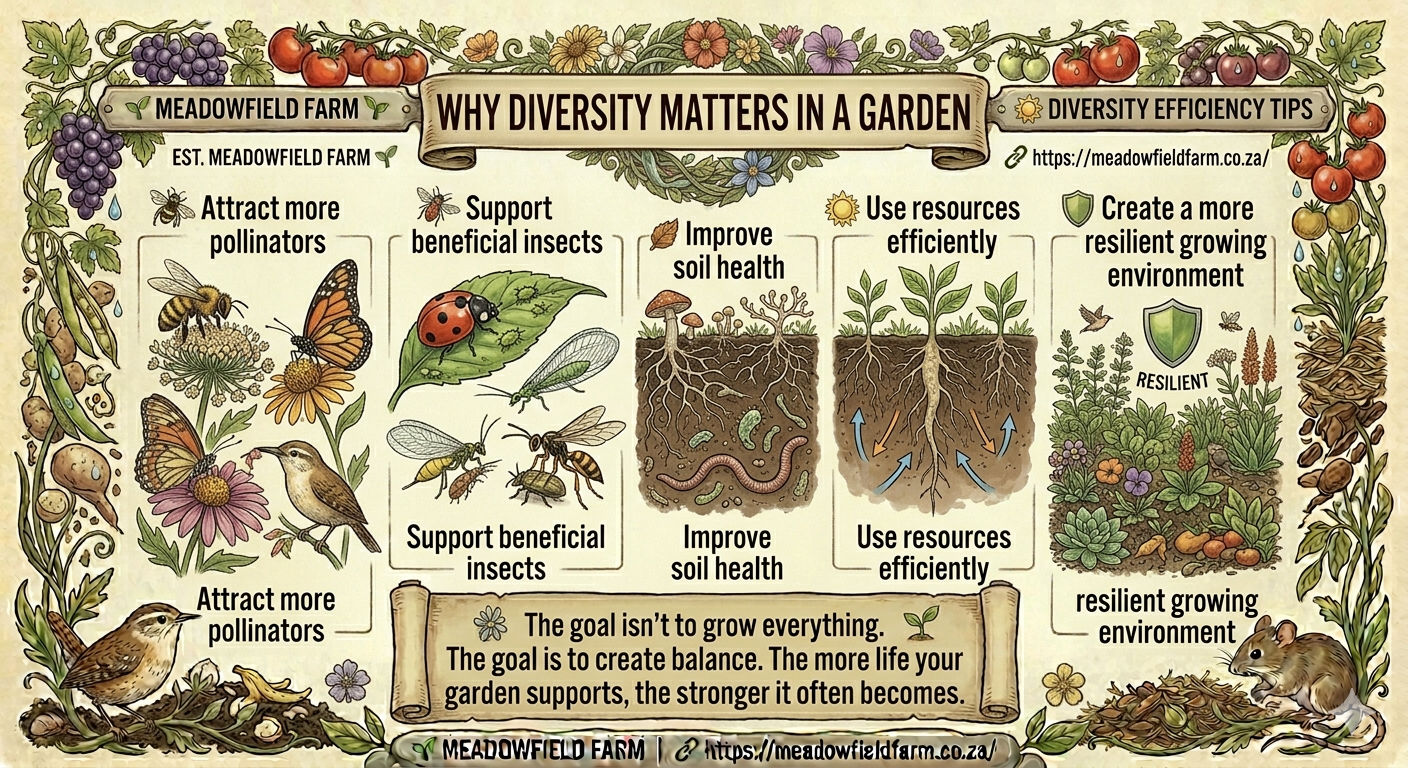
Diversity Supports Pollinators
Many vegetables and fruits rely on pollinators to produce their best harvests.
A garden filled with a variety of flowering plants provides:
- Nectar
- Pollen
- Shelter
- Habitat
This attracts bees, butterflies, and other pollinating insects.
The more welcoming your garden is to pollinators, the more productive it often becomes.
Diversity Helps Manage Pests Naturally
Large areas planted with a single crop can become easy targets for pests.
When insects find a favourite food source concentrated in one area, populations can grow rapidly.
Diverse gardens create a more balanced environment.
They often attract:
- Ladybirds
- Lacewings
- Predatory wasps
- Other beneficial insects
These natural predators help keep pest populations under control.
While diversity won’t eliminate pests entirely, it often reduces the likelihood of major outbreaks.
Diversity Improves Soil Health
Different plants interact with soil in different ways.
Some:
- Produce deep roots
- Add organic matter
- Improve soil structure
- Support beneficial microorganisms
When many plant types grow together, they contribute to a richer and more active soil ecosystem.
Healthy soil is one of the greatest benefits of garden diversity.
Diversity Increases Resilience
Weather changes.
Pests arrive.
Diseases spread.
Some crops thrive while others struggle.
In a garden built around only one or two crops, a single problem can affect everything.
In a diverse garden, risk is spread across many plants.
If one crop performs poorly, others may still succeed.
This creates a more resilient and reliable growing system.
Diversity Makes Better Use of Space
Different plants occupy different parts of the garden.
For example:
- Tall plants use vertical space.
- Ground covers protect the soil.
- Deep-rooted plants access lower soil layers.
- Shallow-rooted plants use the upper layers.
This allows resources such as sunlight, water, and nutrients to be used more efficiently.
Nature rarely wastes available space.
Diversity Creates Beauty and Interest
Beyond productivity, diversity simply makes a garden more enjoyable.
A mixture of:
- Colours
- Textures
- Heights
- Flowers
- Edible plants
creates a space that feels alive and inviting.
Gardens become places people want to spend time in, not just places where food is produced.
Start Small
Creating diversity doesn’t require a complete redesign of your garden.
You can begin by:
🌼 Adding a few flowering plants
🌿 Including herbs among vegetables
🐝 Planting pollinator-friendly species
🍅 Growing several crop types instead of one
Small changes can have a surprisingly large impact over time.
Common Mistake: Chasing Perfection
Some gardeners believe every plant combination must be carefully planned.
It doesn’t have to be.
Nature is not perfectly arranged.
It is diverse, adaptable, and constantly changing.
Your garden can be too.
The goal is not perfection.
The goal is creating a healthier and more balanced system.
Final Thoughts
The strongest gardens are rarely the simplest ones.
They’re often the gardens filled with life.
Plants supporting insects.
Insects supporting pollination.
Soil organisms supporting plant growth.
Everything connected in ways that are often invisible at first glance.
By increasing diversity, you’re not just growing more plants.
You’re building a healthier ecosystem.
And healthy ecosystems have a remarkable ability to take care of themselves.