



Natural Ways to Improve Soil Health
Healthy soil is the foundation of every successful garden.
When soil is rich, alive, and well-structured, plants grow stronger, require less maintenance, and become more resistant to pests and drought.
The good news is that improving soil health does not require expensive products or complicated systems.
In most cases, nature already provides everything you need.
What Healthy Soil Actually Means
Healthy soil is not just dirt.
It is a living ecosystem containing:
- Beneficial bacteria
- Fungi
- Earthworms
- Organic matter
- Air pockets
- Moisture balance
When this system is functioning well, plants thrive with minimal intervention.
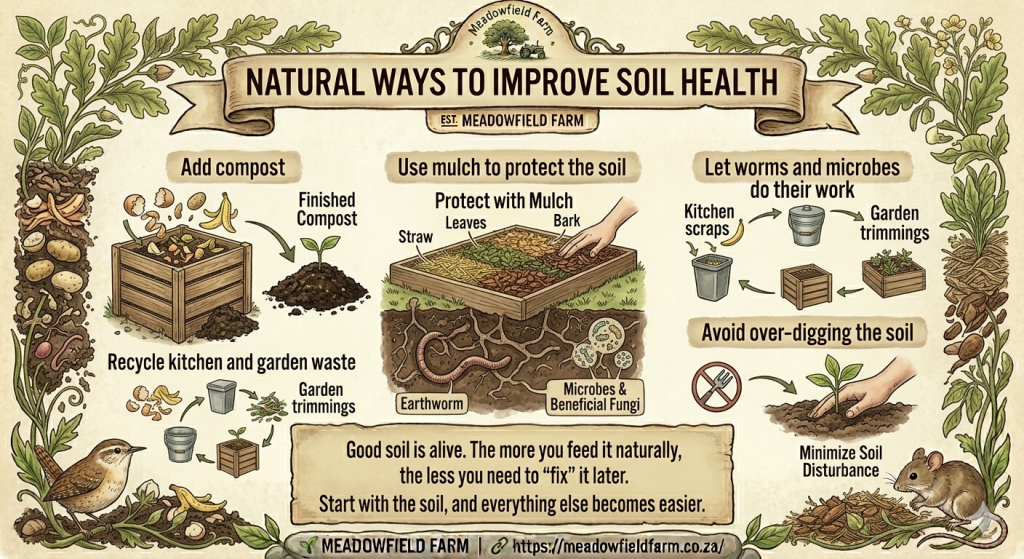
1. Add Organic Matter
One of the simplest ways to improve soil is to add organic material.
This can include:
- Compost
- Kitchen scraps (properly decomposed)
- Leaf litter
- Grass clippings
Organic matter improves:
- Soil structure
- Nutrient availability
- Water retention
Over time, it transforms poor soil into fertile growing ground.
2. Use Mulch to Protect the Soil
Bare soil is vulnerable soil.
Mulch acts as a protective layer that:
- Reduces moisture loss
- Prevents erosion
- Regulates soil temperature
- Feeds soil organisms as it breaks down
Natural mulch options include:
- Straw
- Leaves
- Wood chips
- Grass clippings (dried)
Mulching is one of the easiest ways to improve soil with almost no effort.
3. Encourage Soil Life
Healthy soil depends on living organisms.
Earthworms, fungi, and bacteria all play essential roles in breaking down organic material and making nutrients available to plants.
To support soil life:
- Avoid excessive chemical use
- Minimize soil disturbance
- Keep soil covered
- Add organic matter regularly
The more life in your soil, the healthier your garden will become.
4. Reduce Soil Disturbance
Constant digging and turning of soil can disrupt its natural structure.
While occasional digging may be necessary, overworking the soil can:
- Damage beneficial organisms
- Break down soil structure
- Increase erosion
In many cases, less disturbance leads to better long-term soil health.
5. Recycle What Your Garden Produces
A healthy garden is a closed-loop system whenever possible.
Instead of removing garden waste, recycle it back into the soil.
This includes:
- Plant trimmings
- Dead leaves
- Vegetable scraps (when composted properly)
This process naturally replenishes nutrients and improves soil over time.
6. Water Wisely
Water plays a major role in soil health.
Overwatering can suffocate roots and wash away nutrients, while underwatering can stress both plants and soil organisms.
The goal is balance:
- Water deeply but less frequently
- Allow soil to retain moisture through mulch
- Avoid constant surface watering
Healthy soil manages water more effectively on its own.
Building Soil is a Long-Term Process
Improving soil is not a one-time task.
It is a gradual process that happens over time through consistent, natural practices.
Small actions repeated regularly will always outperform quick fixes.
Common Mistake: Relying on Fertilizer Alone
Fertilizer can provide short-term benefits, but it does not build soil health on its own.
Without organic matter and soil life, fertilizer is temporary.
True soil improvement comes from building a living system, not just feeding plants.
Final Thoughts
The healthiest gardens are built from the ground up.
When you focus on improving soil naturally, everything else in the garden becomes easier:
- Plants grow stronger
- Watering becomes more efficient
- Pest issues often decrease
- Yields improve over time
Start with the soil, and you build a garden that keeps improving year after year.