


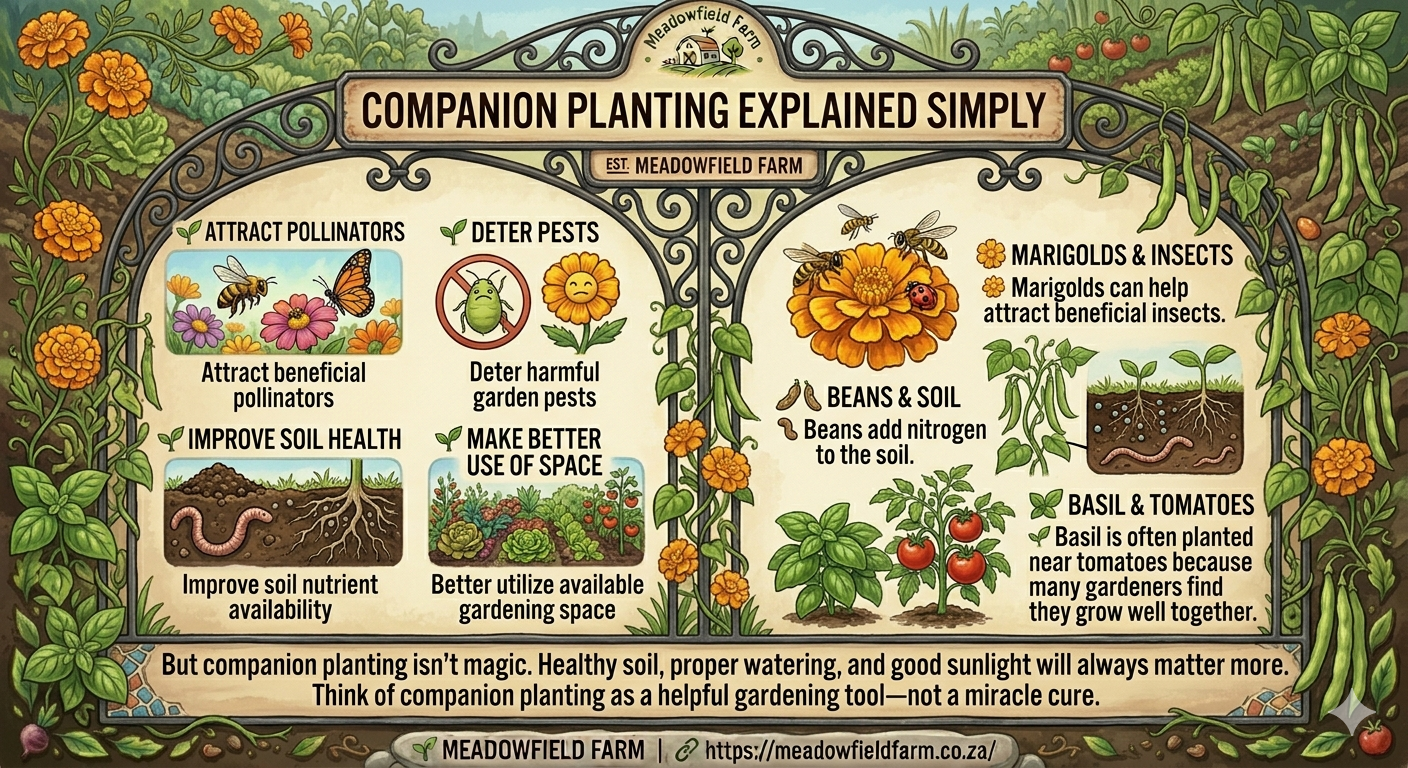

Companion Planting Explained Simply
If you’ve spent any time reading gardening advice, you’ve probably come across companion planting.
You’ll often find colourful charts showing which plants should grow together and which should stay apart.
While some of this information can be useful, it can also make companion planting seem far more complicated than it really is.
The simple explanation is this:
Companion planting is the practice of placing plants together so they can support one another in some way.
That’s it.
The goal is not perfection. The goal is creating a healthier, more balanced garden.
Why Companion Planting Works
In nature, plants rarely grow in neat rows surrounded by bare soil.
Different species grow together and interact with one another in many ways.
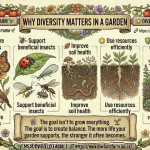
Some attract pollinators.
Some improve soil conditions.
Some provide shade.
Some help reduce pest pressure.
Companion planting attempts to copy some of these natural relationships in the garden.
Benefits of Companion Planting
Attracting Pollinators
Many vegetables depend on pollinators for better harvests.
Flowers planted among vegetables can attract:
- Bees
- Butterflies
- Other beneficial insects
Popular choices include:
- Marigolds
- Calendula
- Nasturtiums
- Lavender
A garden full of flowers is often a garden full of activity.
Encouraging Beneficial Insects
Not all insects are harmful.
Many are valuable helpers.
Beneficial insects can help control:
- Aphids
- Caterpillars
- Other common garden pests
Flowering plants provide food and shelter for these natural predators.
Improving Soil Health
Some plants contribute directly to soil improvement.
Legumes such as:
- Beans
- Peas
work with beneficial bacteria that help make nitrogen available in the soil.
This can support future plant growth and contribute to healthier garden systems.
Making Better Use of Space
Different plants grow in different ways.
For example:
- Tall plants provide shade.
- Low-growing plants cover soil.
- Deep-rooted plants access nutrients from lower layers.
- Shallow-rooted plants use the upper soil levels.
Combining different growth habits can make a garden more productive.
Common Companion Planting Examples
Tomatoes and Basil
One of the most popular combinations.
Many gardeners enjoy growing these together because:
- They have similar growing requirements.
- They make efficient use of space.
- They are commonly harvested and used together.
Beans and Corn
A traditional partnership.
The corn provides support while climbing beans make use of the vertical space.
Marigolds and Vegetables
Marigolds are often planted throughout vegetable gardens because they attract pollinators and beneficial insects while adding colour to growing spaces.
Lettuce Beneath Taller Crops
Lettuce can benefit from partial shade provided by taller plants during warmer months.
This helps extend the growing season and reduces stress on delicate leaves.
What Companion Planting Cannot Do
This is where many gardening articles become unrealistic.
Companion planting cannot:
❌ Fix poor soil
❌ Replace watering
❌ Cure serious pest infestations
❌ Compensate for lack of sunlight
❌ Guarantee perfect harvests
A healthy garden still depends on good fundamentals.
Companion planting works best when it supports an already healthy growing environment.
Start Simple
Many beginners become overwhelmed by companion planting charts.
Don’t.
Start with a few simple combinations.
Add flowers throughout your garden.
Grow different crops together.
Observe what works in your climate and growing conditions.
Gardening is part science and part observation.
Your own experience will often teach you more than any chart.
Final Thoughts
Companion planting is not about finding magical plant combinations.
It’s about creating diversity in the garden.
A garden filled with different plants is often more resilient, more attractive to beneficial insects, and better able to support healthy growth.
Start simple, stay curious, and let your garden show you what works.
Because sometimes the best gardening lessons come from paying attention to the relationships already happening around you.