



Why Healthy Soil Matters More Than Fertilizer
When plants struggle, many gardeners immediately reach for fertilizer.
It’s understandable. Fertilizer promises quick growth, greener leaves, and bigger harvests.
But healthy gardens are not built on fertilizer alone.
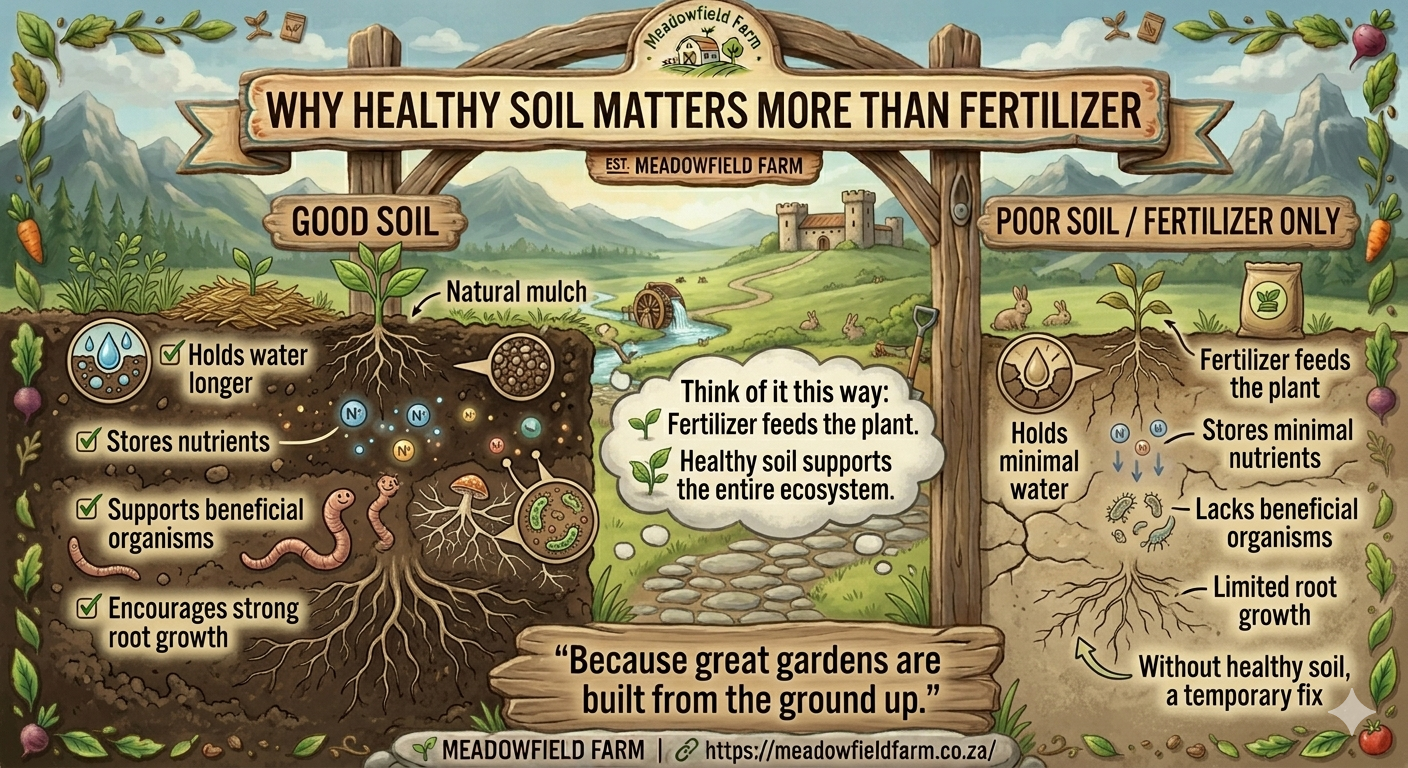
In fact, if your soil is unhealthy, fertilizer often acts like a bandage covering a deeper problem.
The truth is simple:
Healthy soil is the foundation of every successful garden.
Soil Is More Than Dirt
Many people think soil is simply something that holds plants upright.
In reality, healthy soil is a living ecosystem.
A handful of healthy soil contains:
- Beneficial bacteria
- Fungi
- Earthworms
- Insects
- Organic matter
- Nutrients
- Air pockets
- Moisture
All of these work together to support plant growth.
When this underground community is healthy, plants become stronger, more productive, and more resilient.
What Fertilizer Actually Does
Fertilizer provides nutrients that plants need to grow.
Common nutrients include:
- Nitrogen
- Phosphorus
- Potassium
These nutrients are important, but they are only part of the picture.
Adding fertilizer to poor soil is a bit like filling a leaky bucket with water.
You may see temporary improvement, but the underlying problem remains.
Healthy Soil Solves Multiple Problems
Healthy soil does much more than provide nutrients.
It Holds Water
Organic matter acts like a sponge, helping soil retain moisture.
This means:
- Less watering
- Better drought resistance
- Healthier plants during hot weather
It Improves Root Growth
Plants with strong roots can:
- Access more nutrients
- Find water more easily
- Better withstand stress
Healthy roots create healthy plants.
It Supports Beneficial Life
Earthworms, fungi, and microorganisms help break down organic matter into forms plants can use.
They are nature’s recycling team.
Without them, nutrients become less available and soil structure begins to decline.
It Reduces Plant Stress
Plants growing in healthy soil are often:
- More productive
- More resistant to disease
- Better able to recover from environmental challenges
Strong plants naturally cope better with problems.
Signs Your Soil Needs Attention
Your soil may need improvement if:
- Water runs off quickly
- Soil becomes hard and compacted
- Plants struggle despite fertilizing
- Earthworms are rarely seen
- The soil lacks organic matter
These are often signs that the soil ecosystem needs rebuilding.
How to Build Healthier Soil Naturally
Improving soil does not have to be expensive.
Simple methods include:
Add Compost
Compost adds:
- Organic matter
- Beneficial microorganisms
- Slow-release nutrients
Use Mulch
Mulch helps:
- Protect soil from erosion
- Reduce water loss
- Feed soil organisms over time
Avoid Excessive Digging
Constantly disturbing soil can damage its structure and disrupt beneficial organisms.
Whenever possible, disturb the soil only as much as necessary.
Feed the Soil, Not Just the Plants
Instead of focusing only on what plants need today, focus on building soil that will support plants for years to come.
Healthy soil is an investment that keeps paying dividends.
The Long-Term View
Fertilizer has its place in gardening.
But fertilizer should support healthy soil—not replace it.
When gardeners focus on building rich, living soil, they often discover that many other problems become easier to manage.
Healthier plants.
Better harvests.
Less watering.
Fewer inputs.
All from improving what lies beneath the surface.
Final Thoughts
The most productive gardens are rarely the ones receiving the most fertilizer.
They’re usually the ones growing in healthy, living soil.
Before spending money on products, spend time improving the foundation.
Because in gardening, success starts from the ground up.