


Common Mistakes New Gardeners Make (And How to Avoid Them)
Every experienced gardener has one thing in common: they’ve made plenty of mistakes.
Plants die. Seeds fail. Weather surprises you. Pests appear out of nowhere. It’s all part of the learning process.
The good news is that many beginner mistakes are predictable and easy to avoid once you know what to look for.
Here are some of the most common mistakes new gardeners make and how you can avoid them.
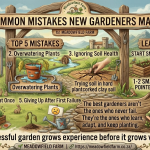
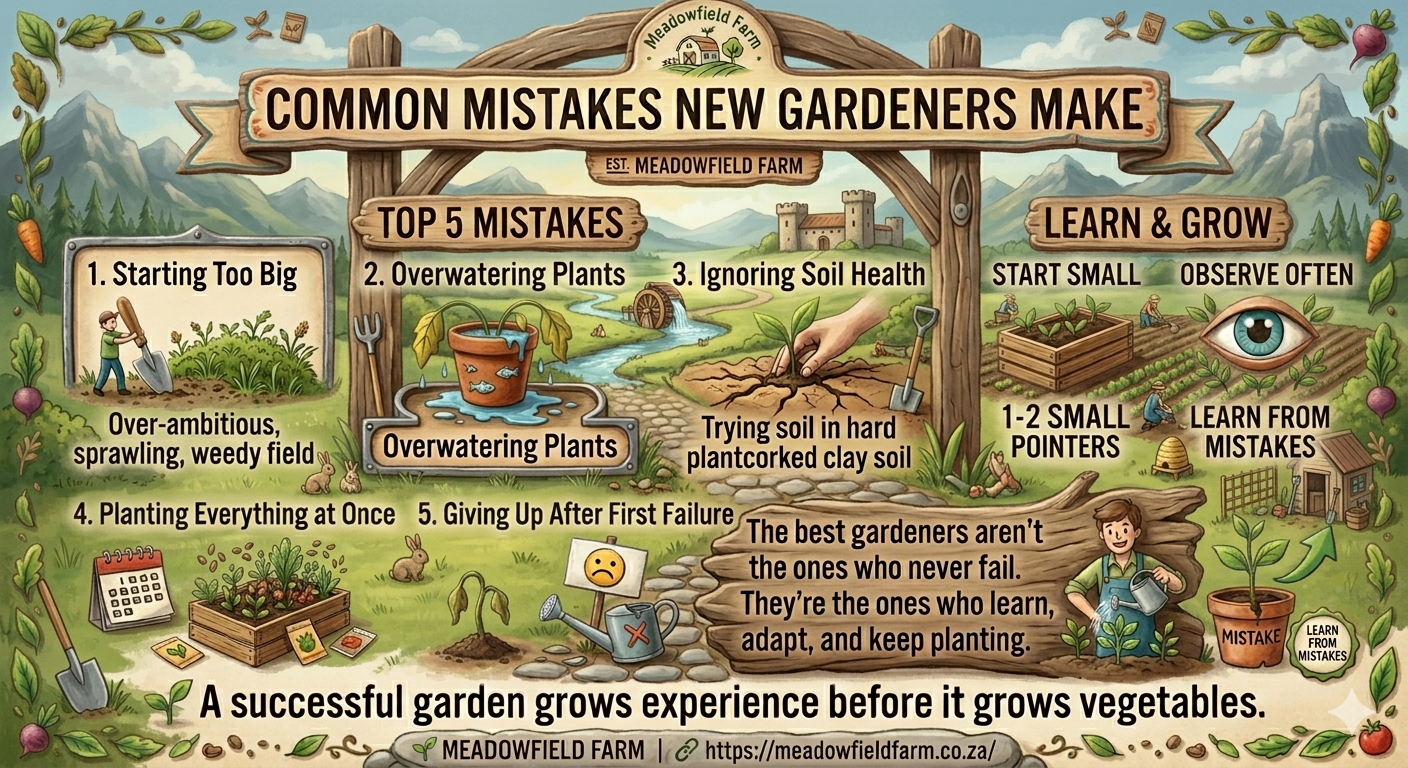
1. Starting Too Big
This is probably the most common mistake of all.
Many new gardeners get excited and decide to plant everything at once. A large garden sounds wonderful until it needs watering, weeding, feeding, and monitoring every day.
A smaller garden is easier to manage, easier to learn from, and far less overwhelming.
Start with a few beds, containers, or a small growing area. You can always expand later.
Remember: a thriving small garden is better than an abandoned large one.
2. Focusing on Plants Instead of Soil
Many beginners spend money on seeds, seedlings, and fertilizers while paying very little attention to the soil.
Healthy soil is the foundation of a healthy garden.
Good soil:
- Holds moisture
- Provides nutrients
- Supports beneficial organisms
- Encourages strong root growth
Before planting anything, invest time in improving your soil with compost, organic matter, and mulch.
Healthy soil solves many gardening problems before they begin.
3. Overwatering
New gardeners often believe that more water equals healthier plants.
Unfortunately, plants can suffer just as much from too much water as too little.
Overwatering can:
- Suffocate roots
- Encourage disease
- Promote weak growth
- Waste valuable water
Instead of watering on a schedule, check the soil first. If the soil is still moist a few centimetres below the surface, your plants may not need water yet.
4. Planting Everything at the Same Time
Seed packets and nursery shelves can make it tempting to grow every vegetable you’ve ever eaten.
The result is often confusion, overcrowding, and more work than expected.
Choose a few reliable crops first.
Good beginner options include:
- Lettuce
- Spinach
- Beans
- Radishes
- Herbs
Learn how these crops behave before adding more complexity.
5. Ignoring Sunlight Requirements
Plants have different needs, but most vegetables require plenty of sunlight to produce well.
Before planting, observe your growing space.
Ask:
- How many hours of sunlight does it receive?
- Is it shaded during the hottest part of the day?
- Do nearby trees or buildings block the light?
Matching plants to available sunlight often produces better results than buying expensive products.
6. Expecting Perfection
Social media has convinced many people that gardens should look perfect all the time.
Real gardens are different.
Leaves get eaten.
Plants fail.
Weather interferes.
Mistakes happen.
Gardening is a skill developed through experience, observation, and patience.
Progress matters far more than perfection.
7. Giving Up Too Soon
Every gardener experiences setbacks.
A failed crop doesn’t mean you’re a bad gardener. It means you’re learning.
Some of the most successful gardeners have years of mistakes behind them. What makes them successful is that they kept going.
Treat every season as a lesson rather than a test.
Final Thoughts
Gardening isn’t about getting everything right the first time.
It’s about paying attention, learning from experience, and improving little by little.
Start small. Build healthy soil. Observe your plants. Be patient with yourself.
The garden doesn’t expect perfection—and neither should you.