
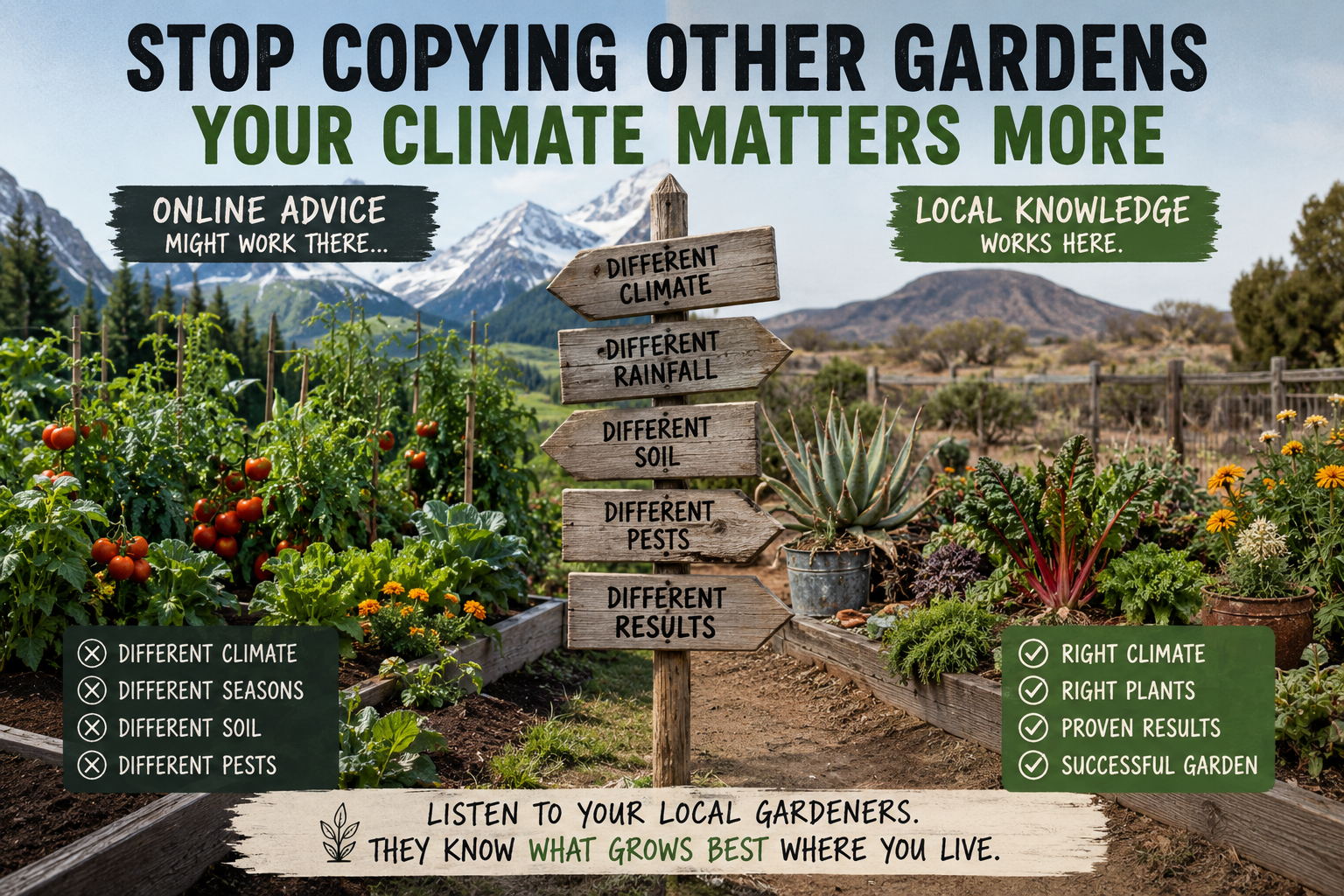

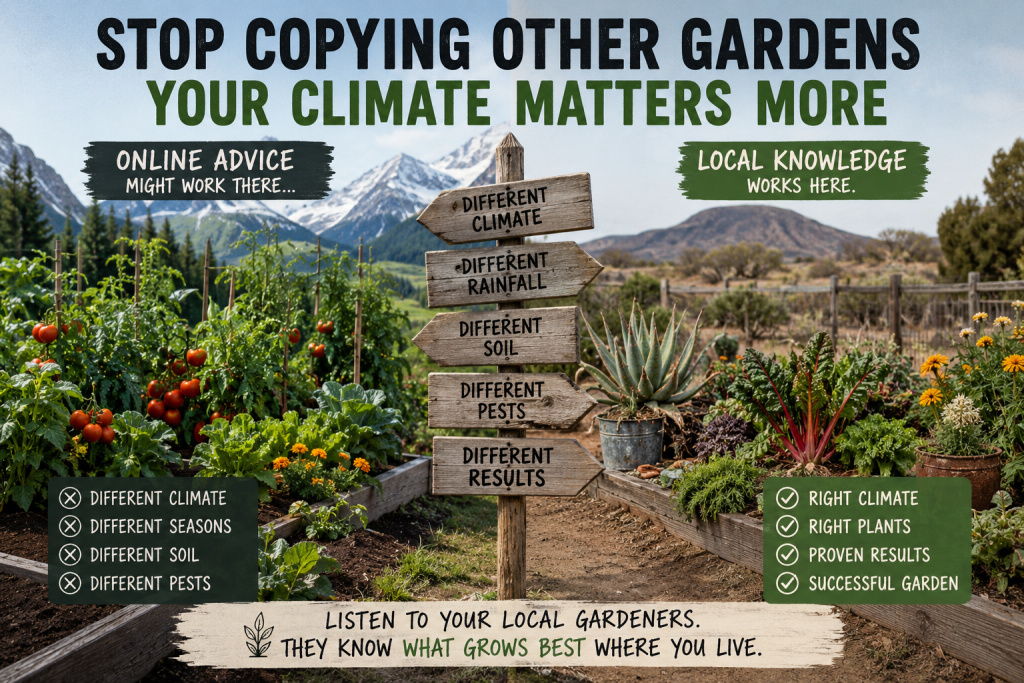
Stop Copying Other Gardens: Your Climate Matters More
The internet has made gardening knowledge more accessible than ever before.
With a few clicks, you can watch gardeners from around the world growing beautiful vegetables, harvesting baskets of fruit, and sharing tips that appear simple and effective.
But there is a problem.
Many gardeners assume that if something works for an influencer, a YouTube channel, or a gardening expert, it should work for them too.
Unfortunately, gardening doesn’t work that way.
One of the most valuable lessons any gardener can learn is this:
Your garden is unique, and local conditions matter more than internet advice.
The Problem With Following Gardening Trends
Every year, gardening trends appear online.
A certain plant becomes popular.
A growing method goes viral.
A new “must-have” crop suddenly appears in everyone’s garden.
Thousands of people rush to try it.
Some succeed.
Many don’t.
Not because they are bad gardeners, but because the advice was created for conditions completely different from their own.
Gardening is not a one-size-fits-all activity.
What thrives in one location may struggle in another.
Climate Changes Everything
Climate influences almost every aspect of gardening.
It affects:
- Growing seasons
- Rainfall
- Soil moisture
- Pest pressure
- Plant growth rates
- Harvest quality
A gardener in a cool climate faces very different challenges from someone gardening in a hot, dry region.
Likewise, a gardener in a summer rainfall area may need completely different planting schedules than someone in a winter rainfall region.
The same vegetable can behave very differently depending on where it is grown.
Sometimes Plants Just Don’t Belong
This can be a difficult lesson to accept.
Sometimes a plant simply doesn’t suit your local conditions.
You can:
- Improve the soil
- Water carefully
- Add compost
- Protect it from pests
And it may still struggle.
Not because you failed.
Not because you didn’t try hard enough.
But because the plant is poorly suited to your environment.
Every experienced gardener has a story about a crop they desperately wanted to grow but eventually gave up on.
The sooner we accept that some plants naturally fit certain climates better than others, the less frustration we experience.
The Most Valuable Gardening Experts May Live Next Door
When gardeners encounter problems, many immediately search online.
There’s nothing wrong with that.
The internet is an incredible learning tool.
But before taking advice from someone thousands of kilometres away, consider speaking to people who garden where you do.
Your neighbours understand:
- Local weather patterns
- Seasonal changes
- Soil conditions
- Common pests
- Reliable crops
They’ve already spent years experimenting.
They’ve already made mistakes.
They’ve already discovered what works.
Their experience is often more valuable than advice from someone gardening on the other side of the world.
Learn Principles, Not Recipes
This is where online gardening content is most useful.
Instead of copying exact instructions, learn the underlying principles.
For example:
Good advice about:
- Soil health
- Mulching
- Composting
- Water conservation
- Biodiversity
can usually be adapted to almost any garden.
Specific planting schedules, crop recommendations, and growing techniques often need to be adjusted for local conditions.
The principle may be universal.
The application is local.
Observe Before You Copy
One of the greatest gardening skills is observation.
Pay attention to:
- What grows well locally
- What struggles repeatedly
- Which insects appear regularly
- When the seasons truly change
- How water moves through your landscape
Your garden will teach you more than any influencer if you’re willing to watch and learn.
Gardening Is About Working With Nature
The most successful gardeners are not those who force nature to cooperate.
They are the ones who learn to work with the conditions they have.
Instead of constantly trying to recreate someone else’s garden, focus on understanding your own.
Your climate.
Your soil.
Your rainfall.
Your challenges.
Your opportunities.
Final Thoughts
The internet is a wonderful source of ideas and inspiration.
But inspiration should never replace local knowledge.
Use online advice to learn principles.
Use your community to learn practical reality.
Because at the end of the day, your garden doesn’t care what worked somewhere else.
It only responds to the conditions right outside your door.