

How to Start a Vegetable Garden on a Budget (Without Overthinking It)
Starting a vegetable garden is often sold as something expensive, complicated, and equipment-heavy. That’s not reality — that’s marketing.
The truth is, you can start growing food with almost nothing. What you do need is a shift in mindset: from “perfect garden setup” to “functional growing space.”
This guide is about stripping it down to what actually matters.
1. Start with what you already have
Before buying anything, look at your space.
A garden can be:
- A small patch of soil
- A few buckets or containers
- An old crate or broken storage bin
- Even a sunny corner of a yard or driveway
The biggest mistake beginners make is building infrastructure before proving they can grow anything.
Start first. Build later.
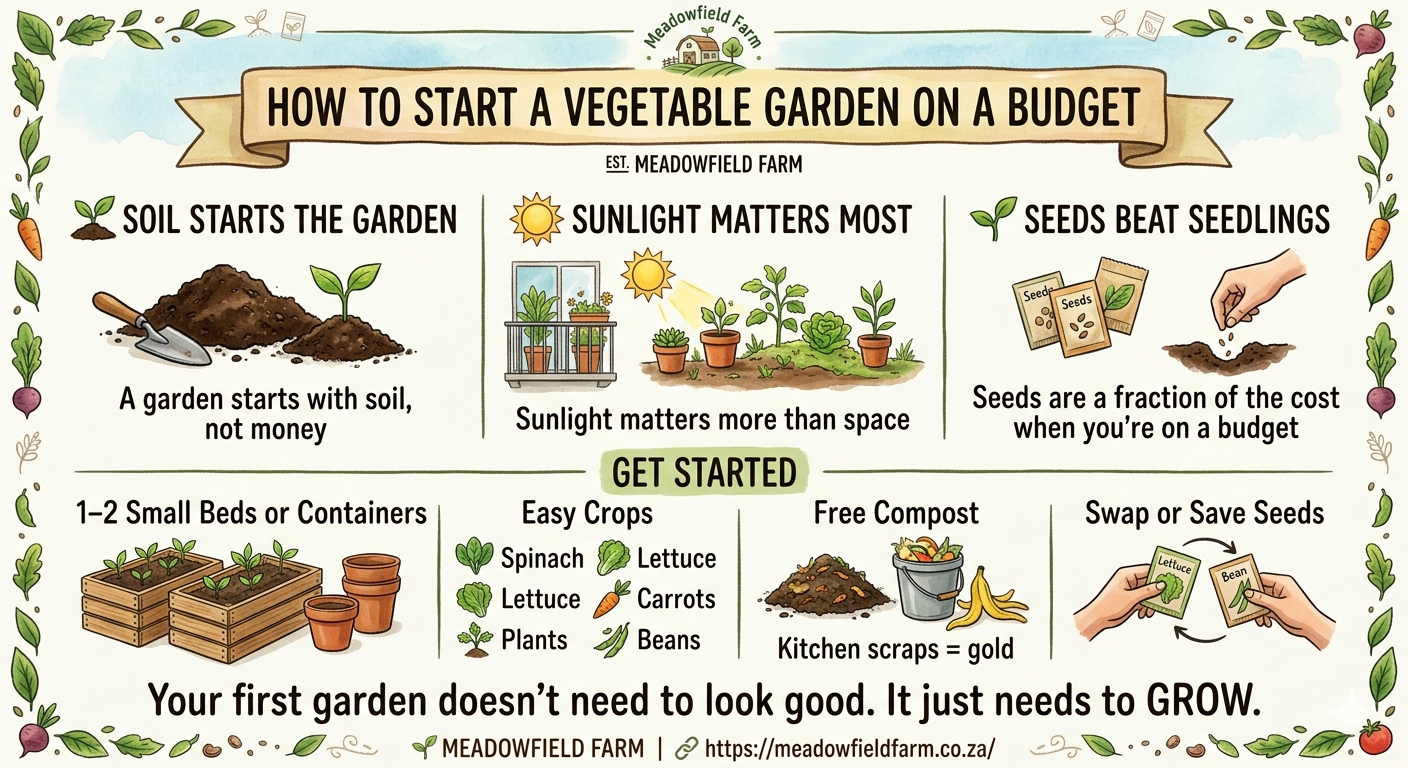
2. Soil is everything (don’t overpay for it)
If you only remember one thing, make it this:
Healthy soil = healthy plants.
You do NOT need expensive branded soil mixes.
Budget-friendly soil options:
- Compost from kitchen scraps (vegetable peels, coffee grounds, eggshells)
- Leaf litter or yard waste compost
- Local organic matter from your environment
- A mix of existing soil + compost + sand (for drainage if needed)
If your soil is alive, your garden will work. If it’s dead, no fertilizer will save it long term.
3. Choose beginner-friendly crops
Don’t try to impress anyone. Grow food you can actually succeed with.
Best budget crops:
- Lettuce
- Spinach
- Beans
- Radishes
- Onions (from scraps or sets)
- Herbs like basil and parsley
These grow quickly, forgive mistakes, and don’t require expensive inputs.
Avoid (for now):
- Cauliflower
- Celery
- Anything “fussy” or slow unless you already know your soil well
4. Seeds are cheaper than seedlings
This is where beginners waste money.
Seeds:
- Cheap
- Long-lasting
- Scalable
Seedlings:
- More expensive
- More fragile
- Often stressed from transport or nursery conditions
If you’re on a budget, always start from seed where possible.
Even better — save seeds from your own plants once you get going.
5. Water smart, not often
A budget garden fails fast when water is wasted.
Better approach:
- Water deeply, not daily
- Water early morning or late afternoon
- Mulch soil with leaves, grass, or straw to reduce evaporation
Mulching is basically “free irrigation support.”
6. Forget perfection — focus on consistency
Most new gardeners quit because they expect straight rows, perfect leaves, and instant results.
That’s not gardening. That’s Instagram.
Real gardening looks like:
- uneven growth
- some failures
- surprise wins
- messy soil
- constant learning
If you keep planting, you will get better. If you wait for perfect conditions, you won’t start.
7. Your cheapest gardening toolkit
You don’t need a fancy setup. Start with:
- Something to dig soil (spoon, stick, old fork)
- Reused containers
- Hands (yes, seriously)
- Water source
- Basic seeds
Everything else is optional.
Final thought
A vegetable garden is not a financial project. It’s a survival skill you slowly build.
Start small enough that failure doesn’t matter — but consistent enough that success becomes inevitable.
Because once you grow your first meal, something shifts. You stop thinking of food as something you only buy… and start seeing it as something you can create.