A growing collection of practical guides, printable resources, and educational booklets focused on sustainable living, self-sufficiency, and real-world learning.
New titles and downloadable resources will be added over time.
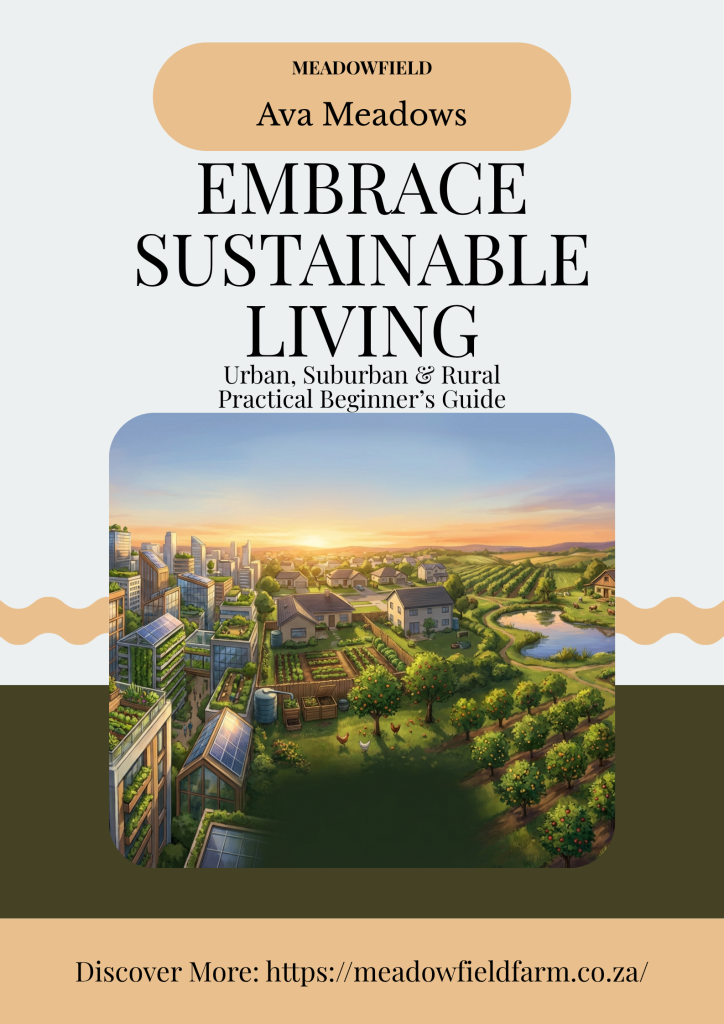
Embrace Sustainable Living – Urban, Suburban & Rural
A Practical Beginner’s Guide
Introduction:
Deny the passenger
(who wants to get off)
Some days it feels like we’re all passengers on a runaway bus — the kind with no brakes, a half-asleep driver, and a sign up front that says “Progress.” And when you finally realize the bus isn’t headed anywhere good, you might start looking for the emergency exit. That’s when the system kindly reminds you: there isn’t one.
Some passengers still believe they can just get off — maybe move off-grid, buy a cabin in the woods, raise chickens, and live “free.” Unless you’ve got a trust fund or a severe allergy to indoor plumbing, you’re not going anywhere. We’re all still tied to this machine in some way — through money, energy, food, and the sheer logistics of modern life. Getting off completely isn’t an option for most of us.
In just two generations, we’ve traded in a good chunk of our freedom and self-reliance for convenience and comfort. Our grandparents fixed things, grew food, built homes, and raised families on one income. Today, we rent small spaces we can barely afford, pay through the nose for utilities, and stare at screens for most of our waking hours. We’ve become specialists in dependence — dependent on systems we can’t control, jobs that barely cover expenses, and a government that invents new ways to siphon what little we have left.
A century ago, there were fewer than 30 distinct federal taxes in most developed nations. Today, between income, sales, property, energy, carbon, healthcare, and everything else, the average person pays into over a hundred different taxes and fees — directly or indirectly — every single year. The average worker now gives up roughly 25–30% of their income to federal and state taxes before even paying rent, which has climbed so high that one full-time income no longer covers it in most cities.
No wonder people feel trapped. The system has become too expensive to stay in — and too hard to leave.
The alternative — sustainable, self-reliant living — sounds harder. It sounds like extra work, like one more exhausting project in a world already draining us dry. Who has the energy to build a garden when you’re working overtime just to keep the lights on? Who wants to learn food preservation when Uber Eats is a swipe away?
We’ve been trained to believe that anything that takes effort is impossible — and anything convenient is normal.
The only real way forward is to start stepping off autopilot. Not to burn it all down, not to run for the hills — but to quietly, cleverly start reclaiming the little bits of control we’ve lost.
This book is about learning to live better within the mess. Not pretending we can get off the bus entirely, but maybe learning to steer it a little — or at least stop paying full fare for a ride we didn’t ask for.